Tuesday, July 24, 2012

SAW is Digging the Dirt!

Priory Country Park, 28th & 29th July


This Saturday and Sunday, at Priory Country Park, Bedford, as part of the national Festival of British Archaeology organised by the Council for British Archaeology, Saturday Archaeology Workshops children will be extending their excavation close to the recorded site of Newnham Roman villa.

The event is open to the public to visit and runs from 10am to 4pm both days

In addition to the excavation, visitors to the Park can follow an historical guided walk to the Newnham Priory Park site, at 11.00am and 2.00pm both days.

For further information, please contact the Park Rangers on:

Come and see what we've found...! See the dig photos in the gallery. 


Monday, July 16, 2012


Collection Point - Unleash your inner curator at the River Festival


Miniature wooden horse from The Higgins Collections

The River Festival is on the 21st and 22nd July 2012. At this years River Festival we would like your help to choose objects that will be going on display when the museum reopens in Spring 2013

One of the new displays in The Higgins is a very large display case that will hold objects that have been chosen to go on display by members of the public. The information labels will also have been written by those that have chosen the objects. We want people to unleash their inner curator.


We're getting the ball rolling by inviting people to choose the first objects to go on display in the Collection Point case at this year's River Festival.

We will be based close to Castle Mound, from 11 am until 5pm during the festival. Members of the public will have the opportunity to look through a shortlist of objects from the collection, choosing their favourites, some of which will go into the Collection Point case. Everyone who chooses an object will be encouraged to write a display label explaining their choice, to be shown alongside it.

We can't wait to see you there.


Full article:

http://3.bp.blogspot.com/-624-ludCObI/UAPmMORVdGI/AAAAAAAABvk/v5Kxyh6nWPo/s1600/collection+point-2.jpg

Tuesday, June 26, 2012

Greeks! Huh!

Archaeologists Don't Jump! (According to some!)

Sport & Olympics in Archaeology

In the spirit of this year of celebration and competition, this month SAW  participants not only absorbed the basics of the history of sports since the first Olympics, but also engaged in a little physical exercise as well!

We started everyone off with some simple 'Calisthenics', (meaning 'Greek' & 'strength'), otherwise known as 'warm-up' exercises. This aspect of 'archaeological research appealed to some SAW  participants more than others! 


The we experimented with various archaeologically evidenced games, such as 'Hobby-Horse Circus Maximus'...


Ben Hur rides again!

This horse missed his oats this morning!
This horse did have oats for breakfast!


Skittles, moving-target shooting and boules! It was edge-of-your-seat stuff!


The tension is mounting!

"You cannot be serious!"

Everyone displayed the best of sporting spirits and received a medal for taking part.


Saturday Archaeology Workshops now takes a break from its regular monthly sessions until September 2012, but you can see 'archaeology-in-action' and find out more about SAW , if you come along to see our excavations. 'Digging the Dirt', part of the Festival of British Archaeology, takes place on Saturday 28th and Sunday 29th July at Priory Country Park, Bedford.


To find out about this event and other festival activities in your area, pleas follow this link:

If you would like to learn more about SAW or take part in our sessions, please follow this link:


Tuesday, May 1, 2012

Update on SAW  - March & April 2012


Marking Time in Bedford River Valley Park
In March SAW strode out into Bedford River Valley Park, through the mist and into sunshine, from Willington Dovecote to Priory Country Park along the cycle path (Route 55). Jeremy Oetgen of Albion Archaeology was our guide, helping us to examine the landscape for clues as to its ancient past.


Bedford River Valley Park


This recently-designated 2000 acre site to the east of Bedford, traversed by the course of the Victorian, Bedford to Cambridge railway and created largely by gravel quarrying hides a wealth of history. Excavations have revealed Bronze and Iron Age burial mounds, medieval remains and evidence for a Roman road.


Re-Making the Dead?
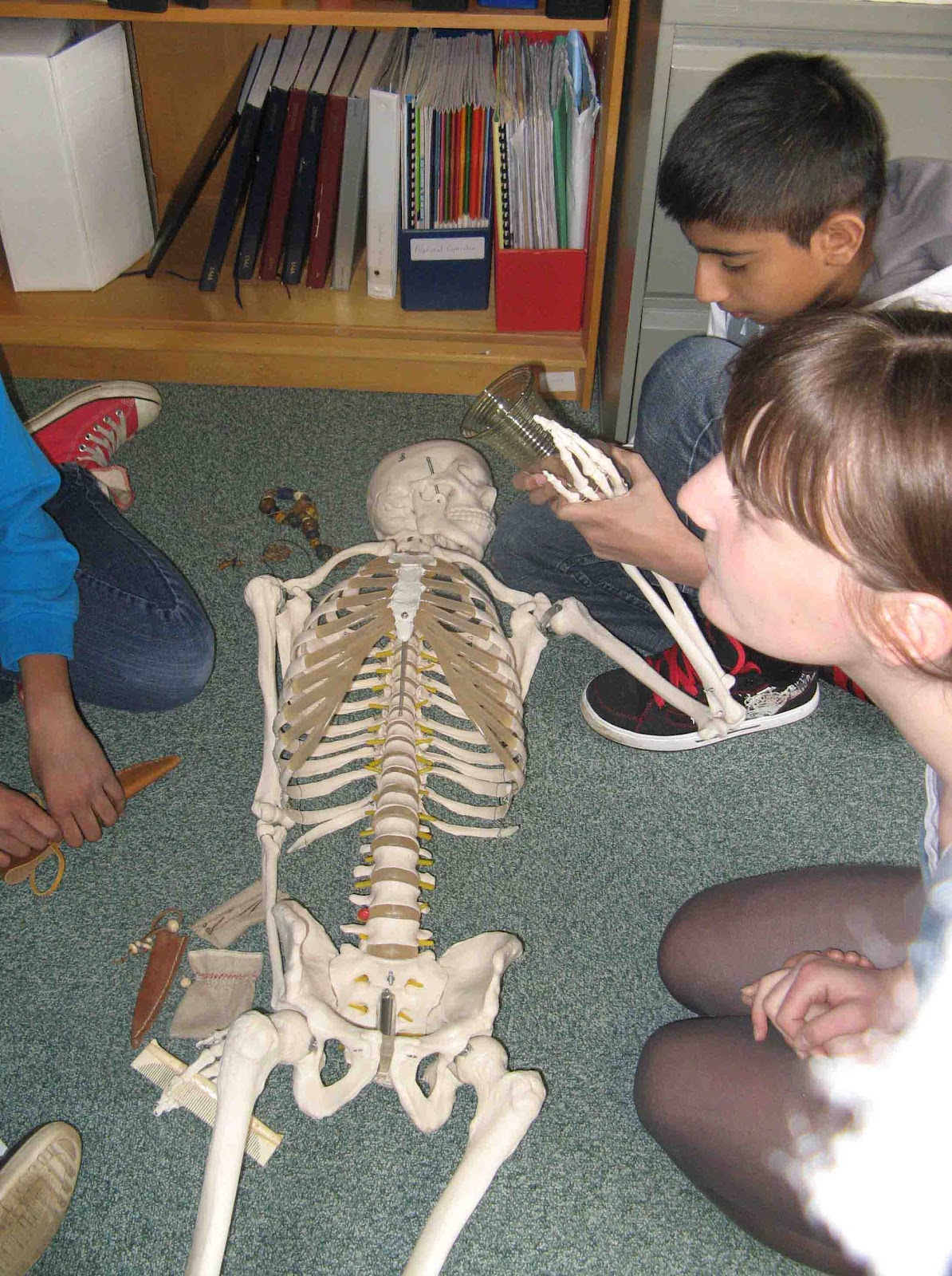
SAW have been busy in the last year, helping staff at The Higgins Art Gallery & Museum, Bedford to think about how they might re-create a display of an excavated Saxon burial. 


This exhibit will form part of the archaeology section of a gallery, currently known as 'The Collectors' Gallery'. The 'Collector's Gallery' is designed to highlight the breadth and diversity of The Higgins' collections and pose questions about collecting and collections.


We hope the burial display will help to explain and compare, how antiquarians used to discover about people who lived in the past and how archaeologists now help us to learn about the past through archaeology, through the things we find and the contexts in which artefacts occur. 


Prize - Surprise!
The Bronze Arts Award candidates have received their certificates - and they were a bit shocked, because they didn't know it was going to happen - sorry folks!  


Well done again!


That's the Ticket!
Roman Bath-house wall - Jewry Wall Museum


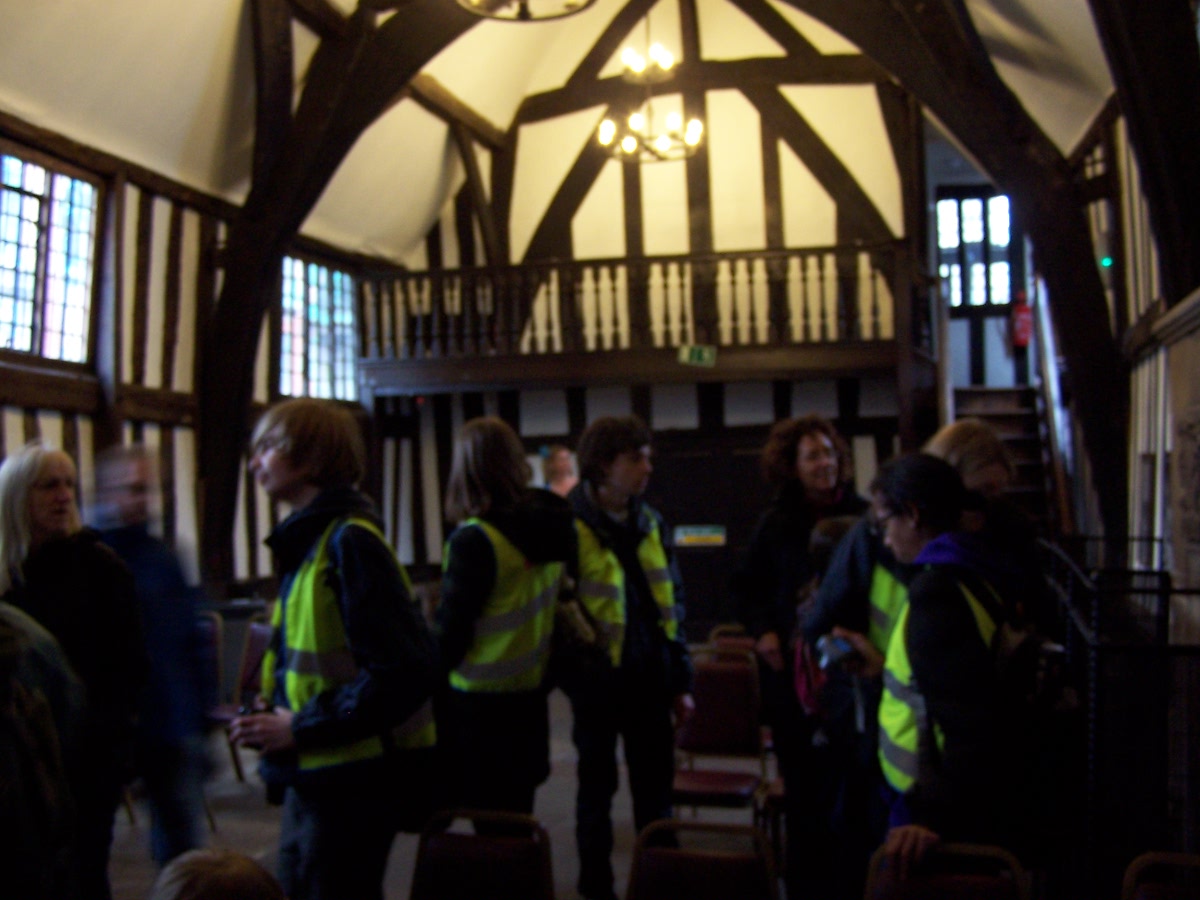
Last weekend, SAW travelled to (chilly), Leicester to visit the Roman remains and Jewry Wall Museum and had an fact-filled tour of historic Leicester by Peter Liddell, Community Archaeologist. Peter explained how successive excavations have revealed and continue to reveal, Leicester's settlement since the Bronze Age. 


The Guildhall - Leicester
   We saw how the centre of the city had 
   moved from the river towards the east but 
    that throughout history, Leicester or in Latin
   - "Ratae Coritanorum", had retained its 
   importance as a regional seat of power.


   Peter took us to the Guildhall where it is 
   thought Shakespeare might have played and
   he showed us Leicester Castle's Great Hall, 
   a hidden Norman building, - sadly we were
   not able to go inside this time, but I'm sure 
   we'll return to Leicester, as there's much, 
   much, more to see.


   Many thanks to Helen for arranging the visit, 
   and to Peter for showing us around.

Sunday, February 19, 2012


Artefacts, Arts & Craft 
Grayson Perry - The Tomb of the Unknown Craftsman - Review
I wanted to see this exhibition by artist Grayson Perry at the British Museum, as I had heard good things about it from several sources, including a recommendation from our Arts Award moderator. As an artist who has undertaken an arts residency in a museum myself, I was interested to see how an artist who had won the Turner Prize (2003), had responded to the British Museum’s collections.
Perry was given access to the stores of the British Museum, where he selected a number of artefacts that attracted his attention and piqued his interest. The resulting exhibition comprises a selection of these artefacts paired with artworks in a variety of media, that he has produced in response. The sculptures, ceramics, works on paper and textiles that he created, are all very well made and incorporate text and images that make pointed commentary on the world in which we now live. 
The exhibition is organised into four areas coming under the lose grouping of, our dealings with death and remembrance, mapping and pilgrimage, fertility and, life as a journey.
Perry seems to be interested in how much our world is overwhelmed with ‘products’, the amount of things we seem to need for our daily existence in comparison with the times of our ancestors and predecessors. He dramatically shows this in his creation of ‘father’ and ‘mother’ pilgrim figures, made of cast iron and shown carrying an inordinate amount of ‘clobber’ - not usual for those travelling long distances on foot.
I admire his wit and re-working of the craft and tradition of pot-making, using his ceramics to mark events, make comments and made as ‘souvenirs’, but in a contemporary context, though I don’t actually like his aesthetic, I think I feel ‘less is more’... It’s something about the works being over rich, it’s just my opinion, but to me they are over elaborate and lacking balance and beauty, - probably exactly how our image-overwhelmed world should be represented.
Texts with the exhibits come in the form of very personal comments explaining why he chose the artefact and what it means to him. Written as spoken, Grayson Perry has a distinctive voice and it was like having him standing alongside you as you looked at the exhibit, as if he was like a friend accompanying you to the exhibition, sharing an aside. 
What’s important I think, is that by putting the British Museum’s items in a art exhibition context, their prime presentation is re-defined (at least temporarily), as cultural objects created by people, rather than artefacts forming part of a national collection. Interestingly, the artefacts don’t loose anything for being exhibited in this way, if anything their inherent power was strengthened next to Perry’s works, by the very simplicity of their forms.
I was looking forward to buying a copy of the exhibition catalogue, my usual souvenir of a ‘pilgrimage’ to an engaging exhibition, but I was disappointed. My impression of the catalogue was of a large book of poorly ‘cut out’ images with bad colour reproduction - it didn’t tempt me at all! If there was another version of the catalogue, I didn’t see it and all the merchandise felt rather ‘thin’; I would have preferred to have seen a well-produced, large image reproduction booklet, showing each of the artefacts paired with their artworks, rather than this over-blown orange-tinged tome.
I enjoyed seeing this personal evocation of meaning, but it didn’t change my life, (I’ve been to exhibitions that have), but it did make me think what artefacts I would choose and it did bring the hidden maker to mind. More importantly, the exhibition that shows art and artefact side by side in a museum, made me think again about our definitions of ‘art’ and ‘craft’, how the meanings are different in museum and in gallery contexts. It also made me question how we see artefacts away from their place of origin, as well as where in fact, contemporary ‘art’ as we know it, has come from.

Susannah

Exhibition closes 26th February, 2012.

Thursday, February 16, 2012

SAW 5 Achieve Their Arts Award


It gives me great pleasure to announce that all 5 SAW Arts Award candidates, achieved their Bronze Arts Award on Saturday 11th February. Very well down to Aidan, Charlie, Jack, John and Oliver for completing the challenge and producing such unusual, exciting and individual portfolios!

Thursday, February 2, 2012


Wednesday 25th October 2011 My trip to Aylesbury, and the Samurai exhibition.

I went to Aylesbury on the 25th of October 2011, we went because of the Samurai exhibition, as I thought it would be useful, as for my project, I am studying medieval Japan and Leather working, and as the Samurai incorporated both into their armour it was a win-win.
I found the Samurai exhibition very interesting, as although we could not take photographs, II drew many of the exhibits. They had a great deal of Japanese artefacts, Including full sets of Samurai armour, Katanas (swords), Kabutos (Helmets), and many more.
The displays were very well laid out, allowing almost unrestricted vision to the cases and their artefacts, and this was good as it allowed me to see all of the artefacts and exhibits.

I liked all of the exhibits, but my favourite was the Katanas, as they had quite a lot of these, and some of them were in pieces, which allowed us to see how they were made up, which I found fascinating. I also learnt a lot about leather armour, and how samurai armour was the first ever example of bullet-proof armour, as it contained a “sandwich” effect of leather-steel-leather.
I also purchased a book, which told me all about the exhibits as well as giving me lots of information on Ancient Japan. This also proved useful, as it had some good information of how the Japanese tanned their leather, as well as how they made it into armour.